
A working session to explore Europe's future(s) in 2040.
AI is changing how people get information, organise, and argue in public — faster than the democracy sector can answer it. On 9–10 November in Berlin, a group of NGOs, experts, policymakers and funders from across Europe will work out which futures are actually plausible, and what each one asks of us.

Monday, 9 November | 12:00–18:00
Tuesday, 10 November | 09:00–17:00

Mitosis Lab
Sonnenallee 67, 12045 Berlin
See on the map
Futures of AI-enabled Democracy brings together people from across Europe who work on democracy and want to understand what AI does to it. Over two days you will build plausible scenarios for European democracy in 2040, together with the others in the room.
The scenarios are the output. They become the basis for follow-up work and new collaborations between organisations across Europe.
This is the second meeting of the collaborative project between Tech To The Rescue and Schöpflin Stiftung. The first was held in June with Mehr Demokratie e.V. and Schöpflin Stiftung's funding partners. This one opens the conversation to a wider group.
AI is already changing how people get information, how they organise, and how public debate works. Most of that change is happening faster than the democracy sector can respond to it.
Nobody in the room can predict which way it goes. What a group like this can do is describe the futures that are actually plausible, name what each one would require, and decide what is worth building now. That is what these two days are for.
Practitioners, technologists, founders and funders working in the democracy sector, from different regions of Europe. Civil society organisations, tech companies, start-ups and foundations.
Organised by Tech To The Rescue and Schöpflin Stiftung, with support from the networks of Project Together, Mehr Demokratie e.V. and Ashoka.

A two-day journey into the futures we could create together
What might democracy look like in Europe in 2040 if AI becomes deeply woven into the way we participate, organise, deliberate and make decisions?
And perhaps more importantly: what kind of democracy do we want to build?
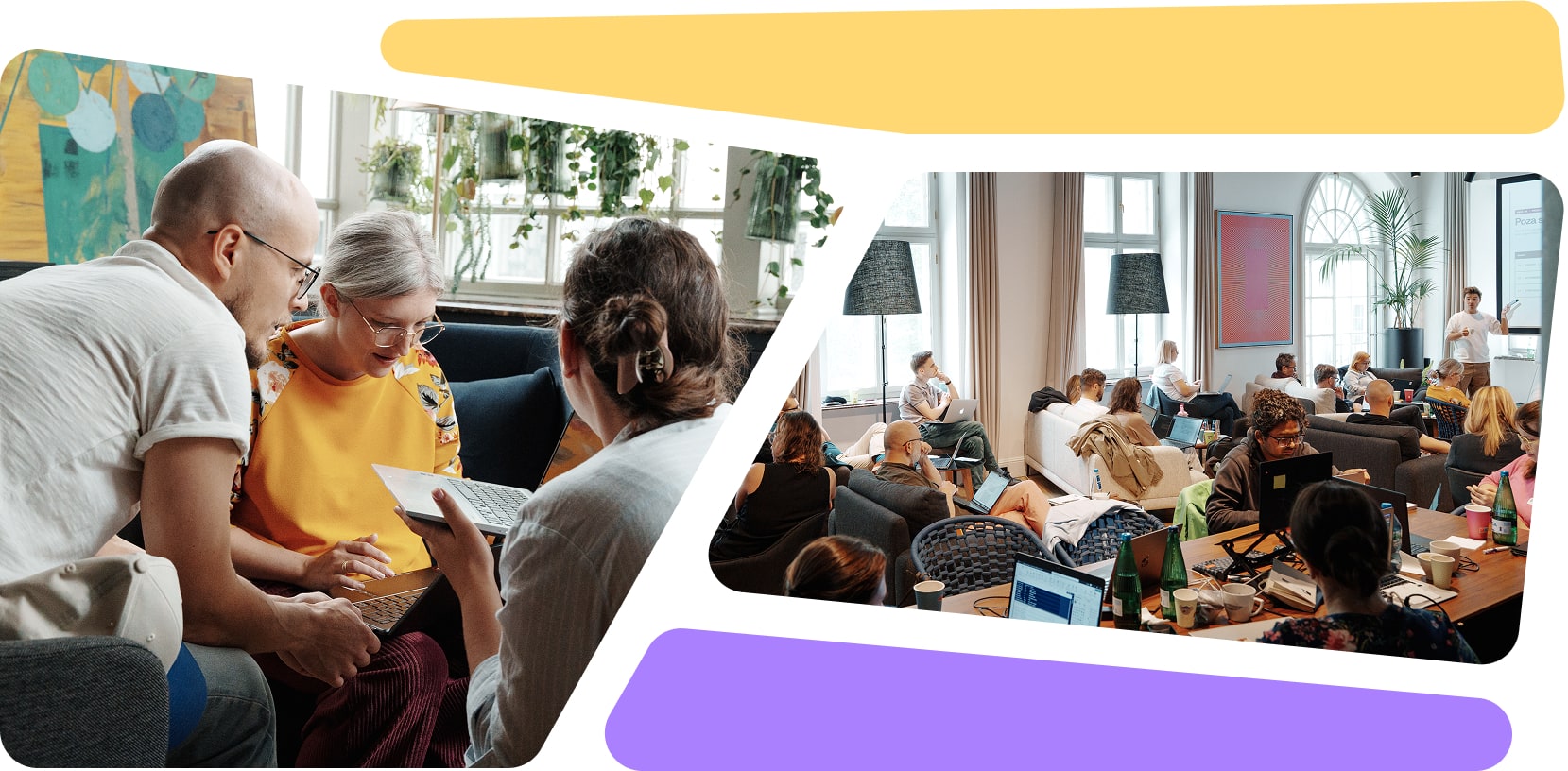
Over two days, we will step away from the pressures of the present to explore possible futures of AI-enabled democracy in Europe. We will bring together different experiences, perspectives and points of view—not to predict the future, but to imagine it, challenge it and begin to shape it together.
This will be a highly participatory experience. There will be no keynote-heavy conference programme and no expectation that we arrive with all the answers. Instead, we will create the space to listen, disagree, imagine, connect signals from the present and turn them into stories about possible futures.
Before we can imagine the future of democracy together, we need to understand who is in the room.
A chance to arrive, settle in and meet one another over lunch.
We will begin not with theories or trends, but with our own experiences.
What is a moment when democracy really mattered to you? What has shaped the way you see it? What do you hope for—and what worries you?Through personal stories and intimate conversations, we will explore the different experiences, identities and emotions we bring into this room.
The aim: to build trust, curiosity and the feeling that everyone’s perspective matters.
A healthy democracy needs more than agreement. It needs the ability to stay in conversation when we see things differently. We will explore the plurality of perspectives in the room, including positions that may sit far apart. Rather than trying to resolve disagreement, we will treat it as something valuable: information about how differently the future can be imagined.
The aim: to become more comfortable with dissent, complexity and perspectives that challenge our own.
After exploring our differences, we will look for the things that connect us. We are going to invite you to join a Fish Bowl format where everyone is invited to take a seat and take part in a panel discussion. And whenever another person wants to join, we switch and make space for them. It’s a way to bring in the perspectives and experiences in the room and hear each other.
What are the projects, initiatives you are working on that can bring us closer to a desired future? What do you see around you? What does this mean?
The aim: to move from “I” and “you” towards a sense of what we might be able to do together.
On the second day, we turn our attention firmly towards the future.
The future does not arrive from nowhere. It is already showing up—in experiments, technologies, social movements, institutions, behaviours and unexpected places.We will explore a diverse collection of signals of change that could tell us something about the future of democracy and AI.We will be looking into the signals of change of today to let people see different ideas, possibilities, options for the future, that we already see in the present.
The question: What is happening today that could become significant tomorrow?
Now we will look beneath the surface.What happens if we follow these signals further? What might they enable—or disrupt? Which assumptions about democracy could they challenge? What new forms of participation, power, representation or collective decision-making might emerge?Together, we will connect the dots, stretch our thinking and explore what these developments could mean for Europe in 2040.The future does not arrive from nowhere. It is already showing up—in experiments, technologies, social movements, institutions, behaviours and unexpected places. We will explore a diverse collection of signals of change that could tell us something about the future of democracy and AI.
The question: If these signals grew, where could they take us?
We will bring our explorations together into stories of possible futures.
Rather than trying to agree on one vision of 2040, we will create multiple scenarios—different ways in which AI and democracy could evolve, including futures that may surprise, challenge or even unsettle us.
These stories will help us make the futures tangible: something we can discuss, question and learn from.
The question: What could Europe’s AI-enabled democracy actually feel like in 2040?
We will close by reflecting on the journey we have taken together.
What has shifted in how we see the future? What surprised us? What questions are we leaving with? And, perhaps most importantly, what could happen next?
We will make space to acknowledge where we started, where we arrived and what these two days have opened up.
Not a single prediction about 2040 or manifesto or a finished answer.
Instead, we hope to leave with new relationships, new questions, shared stories and a richer imagination of what European democracy could become in an AI-shaped world.
And perhaps with a stronger sense that the future is not simply something that happens to us.
It is something we can shape, together.
