December 3 | 4PM CET
Matching Day: meet organisations ready to build AI with your team
Register

 Case Studies
26bitz, a US software company with a small team spread across several countries, builds custom software for digital health startups and MedTech teams. Most of that work stays private, because client contracts, NDAs, and white-label deals keep it out of public view. Its projects with NGOs through Tech To The Rescue are the exception.
Andrey Tatarenko, the CEO of 26bitz, told us its first Tech To The Rescue project, a mental health chatbot for young people with disabilities built with Next Step Foundation in Kenya, was "the very first project that we could publish on our website, fully done on our own from the very beginning." Below, he explains what has come back to both sides, how 26bitz runs these projects like paid work, and how it picks them.
Andrey also has a personal reason. "Everything that I have as a person right now, I am very grateful to other people that believed in me at some point in time. This is why I believe that we should give back to [the] world," he said at Impact Partnerships, our June 2026 session with MedCycle Network on building AI for safety net clinics.
MedCycle Network chose 26bitz for a second project, and Travel Hands became one of its sales case studies.
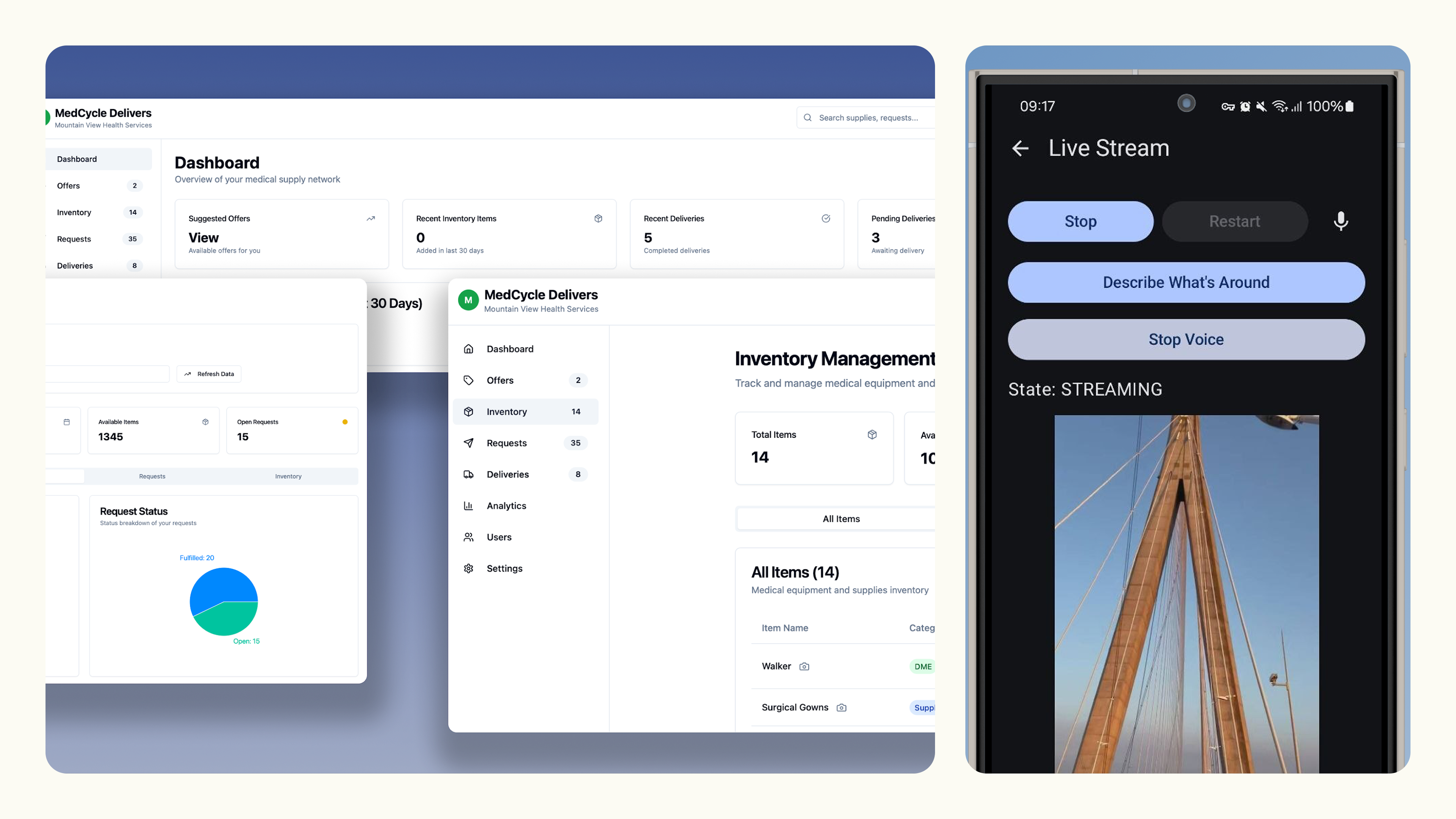
MedCycle Network, a San Francisco nonprofit that moves surplus medical supplies to free clinics, had built the first version of its clinic app with AI coding tools and wanted it ready for clinics. We matched it with 26bitz in January 2026. In a six-week build, 26bitz kept the interface, built a new backend from scratch, and added an admin panel so MedCycle Network's staff could manage stock and deliveries. The app launched as MedCycle Delivers, and Eric Talbert, MedCycle's CEO, says 26bitz "fixed it, cleaned it up, built the infrastructure."
When MedCycle Network joined our AI Impact Scaling Program in May 2026, it met other tech partners and chose 26bitz again. "He knows our organisation, our culture, our challenges, as well as our strengths and what we're really building towards here," Eric says. "That's why we chose to work with them." The current phase, user testing with clinics and app improvements, runs as a paid engagement at nonprofit rates.
Travel Hands, a UK charity that pairs blind and partially sighted people with volunteer guides, went into the sales pitch. We matched it with 26bitz in July 2026, and "Travel Hands is now one of the case studies we pitch with for wearable and live-video work," Andrey says.
Travel Hands wanted its volunteer guides to help travelers remotely through smart glasses. 26bitz staffed the build with one developer and a project manager, with Andrey supervising. The statement of work capped it at 105 hours over two weeks, plus one week for handover.
Andrey describes how the cap holds: "a hard cap on hours and calendar days, a split between must-haves and stretch goals, and one developer scheduled between paid projects rather than pulled off them."
MedCycle Network saw the same discipline. Eric says 26bitz set out what would ship each week, "and then they deliver on it," and flagged any delay with the reason and the new week.
Jiwon Min, who is a CTO, leads MedCycle Network's tech committee as a volunteer board member, compared the experience to paid suppliers. "It felt like any other very, very high quality vendor that we were engaging with, except that we were values aligned and they did this [pro bono]."
26bitz takes on healthcare and technology projects that improve people's lives, the same field its paying clients hire it for. "Outside that area, we usually say no, even when we like the idea," Andrey says. Each project inside it "made us better at what our clients pay us for."
The same filter applies to AI. 26bitz turned down an NGO that, in Andrey's words, "just wanted to have some AI" but could not say which workflow it would improve. Seven of its matches through Tech To The Rescue were AI projects.
26bitz built an Android app that captures live video from smart glasses, streams it to a cloud server, and records it to AWS S3, using Kotlin, WebRTC, Gemini, and the Meta Wearables SDK. The app sends the AI a single frame when the traveler asks a question, and keeps continuous video out of the AI pipeline.
"Earlier AI projects taught us that continuous video gets slow and expensive fast," Andrey says. "For a proof of concept, one frame on request was enough to show the idea works, with quick answers and low cost." He sees continuous video as a feature for the live product, where it can be designed and tested properly.
Two problems came up during the sprint. Vertical frames from the glasses broke the default WebRTC encoding, and Android dropped Bluetooth audio to phone-call quality, which matters when a remote guide needs to hear traffic. The team fixed both within the two weeks.
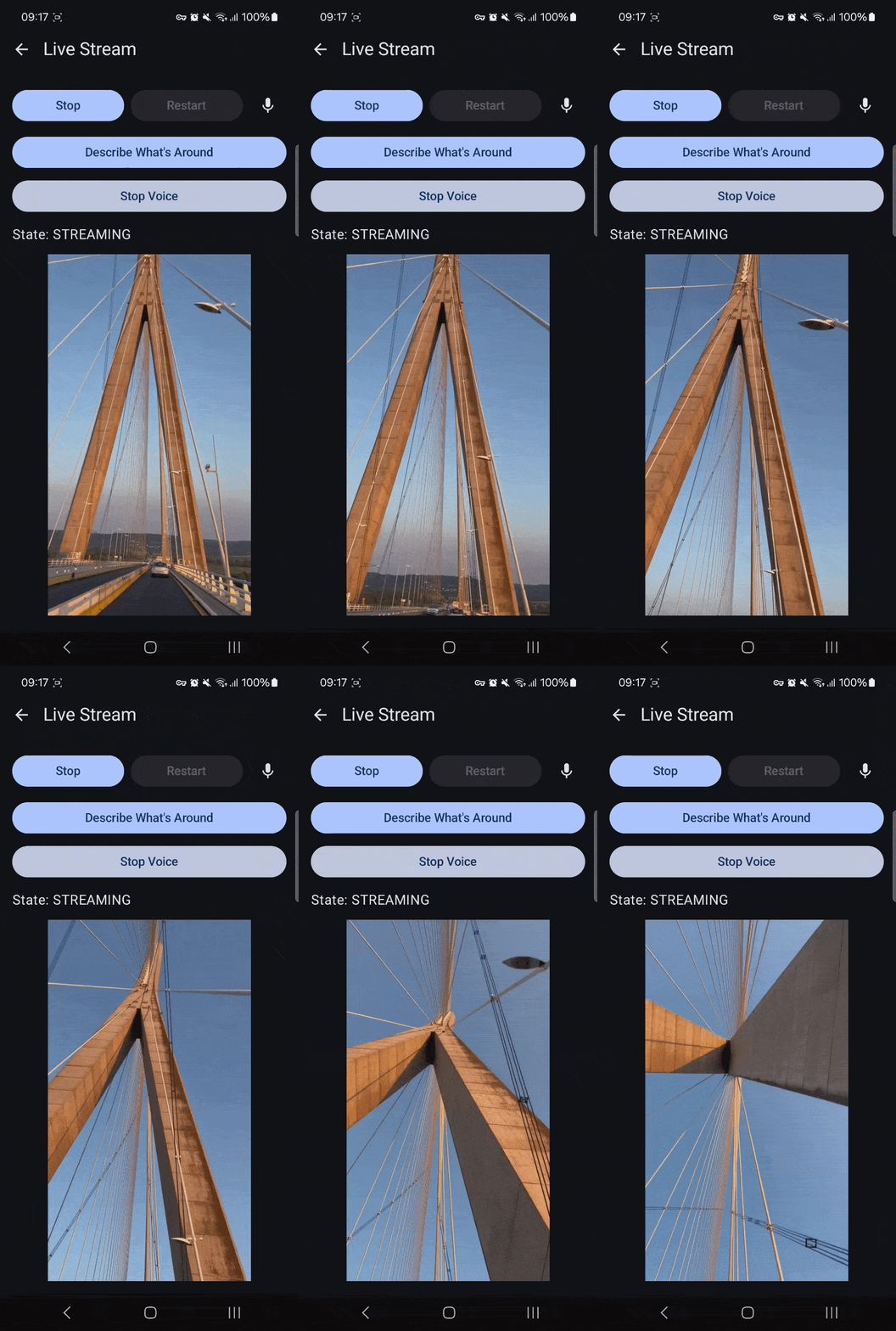
26bitz scoped Travel Hands as a proof of concept: get video off the glasses, stream it and record it, then add AI if time allowed. Travel Hands' real goal is a volunteer guiding a traveler live, and after handover founder Ishan Jha told the team that loop did not yet work end to end.
"We should have drawn the line between 'the stream works,' and 'a volunteer can guide with it' more clearly at the start," Andrey says. 26bitz has since estimated the live guidance phase, and Travel Hands is deciding which modules to fund.
At our June session, Eric had advice for tech founders who are still hesitant: "Be really clear around your boundaries and what you can do. Don't overpromise, don't overstretch."
"There's not much to take over, because it was theirs from day one," Andrey says of Travel Hands. The build ran on Travel Hands' own AWS account and subdomain. At the end of week two, 26bitz moved both repositories into Travel Hands' GitHub with documentation and passed credentials through a shared vault. After handover, it fixed a CI break that the repository transfer caused and sorted out S3 access with Travel Hands' developer.
MedCycle Network worked the same way. 26bitz set up the AWS infrastructure in MedCycle Network's own account at the start of the build and handed over the source code and credentials at the end.
"Mostly, a shortcut to the right people," Andrey says. "Every nonprofit on [Tech To The Rescue] has already written down the problem, what exists, and where they're stuck. For us, it swaps marketing spend for engineering hours, and the nonprofits who come out of it already know how we work."
NGOs present their projects at Matching Day and on the Tech To The Rescue platform, and tech companies choose the ones that fit their team. 26bitz registered on the platform in April 2025 and was matched with MedCycle Network and Travel Hands, both inside its healthcare specialty.
Every matched tech company gets a package to announce the match and, when the project ends, a case study it can use as its own.
26bitz publishes case studies of both builds, Travel Hands and MedCycle Network, along with Clutch reviews from each organization.
Eric put it directly to tech founders at our June session: "Do it with Tech To The Rescue. It's really powerful, and there needs to be a bridge."
Tech To The Rescue is a global nonprofit that helps NGOs scale what already works. We match engineering and AI teams like 26bitz with NGOs like Travel Hands and MedCycle Network whose projects fit their skills.
Andrey's advice to founders who are still unsure is to take one small step. "I would just encourage them to try the next step," he said in June, pointing them to Matching Day.
The next chance to match is Matching Day, online on 3 December at 4 PM CET. Registering takes a free account and doesn't commit your team to a project, and registered companies can apply for a brief before it goes to the wider network.
Register for Matching Day.
Read the NGO side of these builds in our Travel Hands case study and MedCycle Network case study.
26bitz capped its Travel Hands build at 105 hours over two weeks, with one developer and a project manager, plus one week for handover. The two teams agreed on a scope in a statement of work before the build started.
They did for 26bitz, when MedCycle Network chose it again for its AI Impact Scaling Program project, which runs as a paid engagement at nonprofit rates. Travel Hands is now one of the case studies 26bitz pitches with for wearable and live-video work.
In both 26bitz projects, the NGO did. Travel Hands and MedCycle Network each ran the build on their own AWS account, and 26bitz handed over the code and credentials at the end.
26bitz accepts projects in healthcare and technology that improve people's lives, the field its paying clients hire it for. It usually declines projects outside that area, and it has turned down an NGO that wanted AI without a workflow to improve.
NGOs present vetted projects at Matching Day and on the Tech To The Rescue platform, and tech companies choose the ones that fit their team. 26bitz was matched with MedCycle Network in January 2026 and with Travel Hands in July 2026.


