September 23 | 3PM CEST
Matching Day: meet the 15 organisations ready to build AI with your team
Register

On September 23, fifteen social impact organisations pitch the AI project they need a tech partner to build. Each organisation brings a proven intervention and its own technical brief.
Register your team and apply for a project before these briefs go out to the rest of our network.

September 23, 2026
Wednesday

3:00–4:30 PM CEST
9:00–10:30 AM EDT
Every organisation pitching on September 23 already runs the intervention this project extends, and has evidence that it works. Each pitch covers what exists today, what needs building, and what that build makes possible. In 90 minutes you will see fifteen briefs and know which ones your engineers could take on.
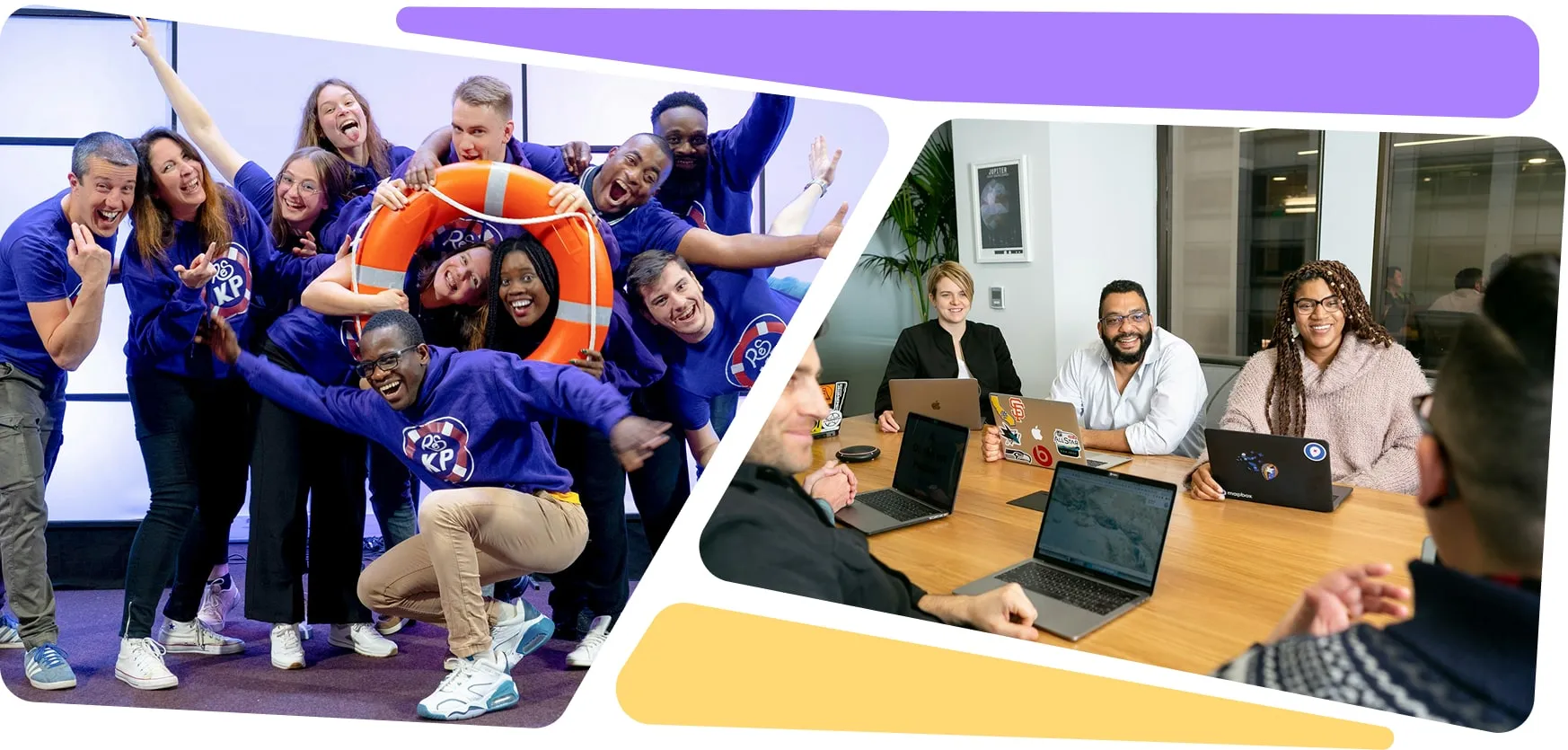
Projects on the table span maternal health in India, drought advisory for Indian farmers, adolescent mental health in the United States, AI literacy across Southeast Asia, refugee and migrant women's upskilling in Germany, electoral integrity in Poland, and nine other domains. Pick the field your engineers want to work in.
These projects need the kind of work your team ships every quarter. RAG pipelines and hybrid retrieval, model fine-tuning and inference cost optimisation, multilingual voice and IVR delivery, offline-first mobile, satellite and geospatial data pipelines, knowledge graphs and query services, OCR at scale, human-in-the-loop review tooling. Each pitch on September 23 names the specific build the organisation needs.
Teams that take on a project earn the TTTR Badge, are featured across our ecosystem channels, and finish with a documented case study you can put in front of clients, candidates, and your leadership team. You also join a network of companies delivering AI work with social impact organisations worldwide.
Joining the event is free. Registering doesn't commit your team to a project. Show up, hear the briefs, and decide whether anything fits. If it does, you are first in line to apply. If not, you have spent 90 minutes seeing what fifteen organisations are running with AI.
From the live event to project kickoff.
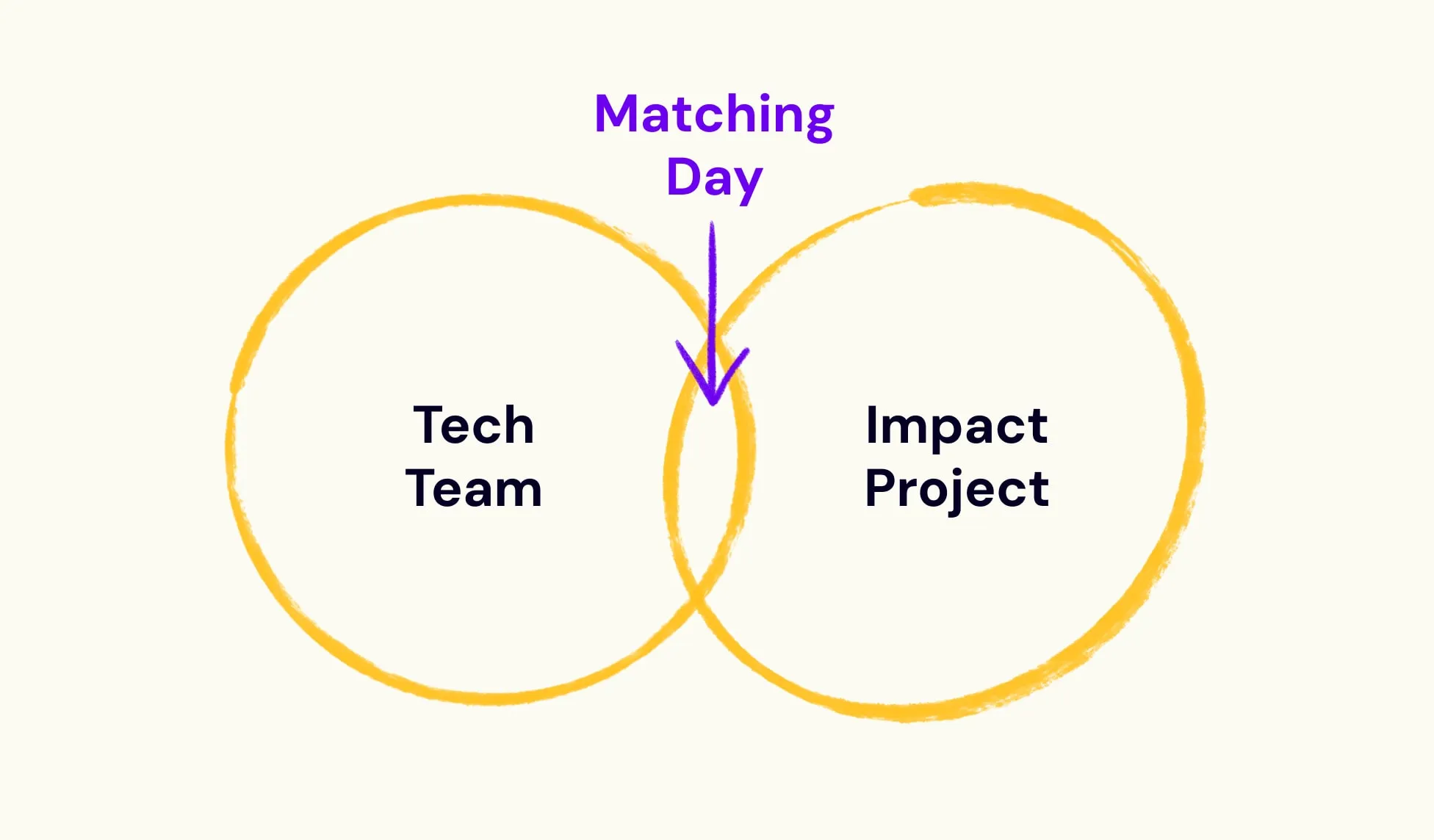
1
Join the TTTR ecosystem
No commitment to match. Join our Tech To The Rescue community.
2
Join the live event
Each social impact organisation pitches their AI project in three minutes. You can ask questions directly and see which ones might fit your team.
3
Apply for the collaboration
Registered tech companies get a head start before applications open more widely.
4
Matching meeting
We facilitate a structured introduction between your team and the social impact organisation to align on scope, timeline, and ways of working before kickoff.

On September 23, Matching Day brings together 15 non-profit organizations from the AI Impact Scaling Program. Ten of them are referred and supported by Google.org. The remaining 5 are joining through Tech To The Rescue’s own programs.
India

ARMMAN works to reduce maternal and child mortality in India, reaching pregnant women, caregivers and frontline health workers through government health systems. Their Knowledge Assistant is a multilingual WhatsApp assistant that gives Auxiliary Nurse Midwives protocol-aligned answers on high-risk pregnancy management, escalating to medical experts when a query falls outside scope. It is deployed to over 9,000 nurse midwives across multiple states, has handled more than 45,000 real queries, and sees over 60% repeat usage. At Matching Day they want a tech partner to build a personalisation engine for bite-sized lessons, cut inference latency and cost, extend the multilingual and voice pipeline, and strengthen automated evaluation.
Referred and supported by Google.org.
Sri Lanka
The International Water Management Institute works on water and food systems across South Asia. SukhaRakshak AI is live in production, a conversational drought advisory in more than 22 Indian languages that fuses ICAR-CRIDA district contingency plans held in a vector store with live SADMS satellite indices served through Google Earth Engine and probabilistic seasonal forecasts, then returns one concrete action a farmer can take this week. At Matching Day they want a tech partner to build voice-first delivery over IVR and WhatsApp, automate ingestion of district plans, integrate with state platforms such as Maha-VISTAR and the national Krishi DSS, and add an accuracy and safety harness benchmarked against expert review.
Referred and supported by Google.org.
United States
The Child Mind Institute supports children and families facing mental health and learning challenges. Mirror, its free journaling and early-support app for adolescents and young adults, lets users reflect through text, voice or video, respond to clinician-designed prompts, and reach human and crisis support when they need it. Mirror has passed 200,000 downloads with around 12,800 monthly active users, and clinical oversight governs how its safety system behaves. At Matching Day they want a tech partner to extend Mirror from single-entry analysis to longitudinal insight, building the data pipelines, recommendation logic, resource taxonomy and privacy controls that let the app recognise change over time.
Referred and supported by Google.org.
Indonesia | ASEAN region
The ASEAN Foundation runs AI Ready ASEAN, a regional programme building AI literacy across ASEAN member states. Its learning platform, AI Class ASEAN, delivers competency-based pathways for youth, educators and parents, works offline for communities with limited connectivity, and embeds an AI chatbot built with SEA-LION by AI Singapore. The programme has reached more than 418,000 learners and certified thousands of Master Trainers. At Matching Day they want a tech partner to add personalised learning and intelligent recommendations, build learner analytics, strengthen offline functionality, and integrate with the regional AI Opportunity Fund platform developed by AVPN.
Referred and supported by Google.org.
United States

ISTE+ASCD supports educators across the United States and reaches around one million people through its programmes. StretchAI is its production RAG platform, an instructional and wellness coach whose answers are grounded in a curated ISTE+ASCD library updated monthly, with clickable citations back to the source. It runs on AWS using Fargate, Lambda and Postgres with pgvector. At Matching Day they want a tech partner to build a data and insights engine over their question and response data, wire source tagging into retrieval with a self-service upload path for districts, and add hybrid keyword and vector search tuned against measured failure patterns.
Referred and supported by Google.org.
Netherlands
The OCHA Centre for Humanitarian Data runs HDX Signals, which alerts humanitarian responders when data indicates a situation is deteriorating. The next step is HDX Signals AI, a natural language interface over the historical and contextual data on OCHA's platforms, letting a responder ask what a signal implies and get an answer with sources, citations, and charts or maps where they help. At Matching Day they want a tech partner for model selection, fine-tuning against HDX, ReliefWeb and FTS data, interface design, and the integration and infrastructure choices that make the system straightforward to scale afterwards.
Referred and supported by Google.org.
United States

Networks for Humanity maintains an open transaction network stack built on the Beckn protocol, live at scale, that lets any buyer app and any seller app interoperate the way email works across providers. Open registries make participants discoverable, a gateway routes transactions between them, and open-source tooling stands up a compliant network in under an hour. Connecting each new participant still takes an engineer weeks to months of manual schema mapping. At Matching Day they want a tech partner to build a system that reads an organisation's schema, API documentation or catalogue and generates the integration itself, with human review and confidence flagging wherever a mapping is uncertain.
Referred and supported by Google.org.
United States

One Degree helps people find and enrol in social safety net services in the United States, reaching more than 441,000 people across 230 institutions. Their AI Innovation Lab runs two prototypes: PDF digitisation that parses enrolment forms, collects the information digitally and routes it to the provider, and an agentic intake tool that completes third-party web forms on a user's behalf. The approach works around legacy provider systems rather than asking agencies to replace them. At Matching Day they want a tech partner to design AI-powered enrolment infrastructure with 211 networks.
Referred and supported by Google.org.
United States

The US Chamber of Commerce Foundation leads the New Economy Alliance, turning local workforce data into interoperable intelligence that states can act on. The infrastructure connects Arkansas Project Launch, the Chamber's JEDx employment and earnings standard, the NSF-funded Industries of Ideas early warning work, and C-BEN's field-building across more than 800 institutions in 35 states. WIRE, the first user-facing product, translates a plain-language question into a validated read-only query and returns results with definitions, geography, sources, coverage and limitations. At Matching Day they want a tech partner for production engineering across cloud and security architecture, source adapters, data and ML pipelines, knowledge graph and query services, documented APIs, and observability.
Referred and supported by Google.org.
Germany
Mevidence built the Cancer Patient Assistant, a fact-checked AI assistant that gives patients and their families guidance on cancer therapies, follow-up care and side-effect management in plain language. It ingests curated, evidence-based material from established German cancer support organisations and surfaces it on demand rather than leaving it buried in static documents. At Matching Day they want a tech partner to scale bulk import of medical sources, improve the fact-checking RAG pipeline against quality metrics, harden the safety guardrails, add German, English, Turkish and Ukrainian support, and build precise passage highlighting.
Referred and supported by Google.org.
Germany

Kiron builds digital pathways into higher education and employment for refugee and migrant learners in Germany, with more than 31,000 people reached and this project focused on women. Its Learning Hub inside Kiron Campus brings goals, tasks, live sessions and milestones into one place, and tracks engagement signals so staff can spot learners who need support. The platform runs on Laravel, GraphQL, React, PostgreSQL and Kubernetes. At Matching Day they want a tech partner to build an AI Coach into the Learning Hub, structuring learner activity data as context for real-time guidance, personalised learning paths and opportunity recommendations, plus AI inside their internal n8n automation layer.
Joining through Tech To The Rescue's own programs.
United Kingdom

Reboot The Future works with educators on sustainability, wellbeing and global citizenship, reaching around 22,000 people. Reboot Education, built with Opencast, runs an automated classification pipeline that tags educational resources by stage, by 25 or more subject areas, and by 16 or more SDG-aligned themes. Labelling that took up to two hours now takes about five minutes at 80 to 90% accuracy. At Matching Day they want a tech partner to refactor the codebase for scale, add AI-enabled personalisation for learners, build dashboards for partners and stakeholders, and improve onboarding so more schools and organisations can adopt it.
Joining through Tech To The Rescue's own programs.
Poland

Klub Jagielloński works on depolarising Polish public debate and grounding it in evidence, and its earlier advocacy helped make parliamentary public consultations a requirement from 2024. Since then around 150,000 people have filed 237,291 comments that largely go unread. Mapy Debaty, their live prototype, is an explorer across roughly 279 bills that compares the sponsor's regulatory impact declaration against the independent Chancellery of the Sejm assessment and maps where the two diverge, with every finding linked to its source document and verified by someone other than its author. Expert analysis of a single bill drops from around four days to around four hours. At Matching Day they want a tech partner to process consultation submissions at full scale, most of them scans and irregular PDFs, and to build the civic engagement layer that carries a citizen from the debate map into an actual consultation response.
Joining through Tech To The Rescue's own programs.
Poland

Czulent monitors the Polish online environment for hateful and illegal content, and its reports reach the EU Agency for Fundamental Rights, the Institute for Jewish Policy Research, and judge and prosecutor training run through EJTN. Between 200,000 and 500,000 posts fall inside its monitoring scope each month, and analysts can read only a fraction of them. Their prototype runs a deterministic pass across the full dataset against a corpus of 29 myths, 196 core terms and 102 masking terms, alongside a language model pathway that reads context and surfaces masking the corpus does not yet contain. Every flag carries a justification and the examples behind it, and an analyst approves or rejects it. At Matching Day they want a tech partner to build the production layer, covering a backend and database for the full corpus, permission levels, an audit log of human decisions, and a mechanism that turns analyst corrections into lasting model improvement.
Joining through Tech To The Rescue's own programs.
Poland

Fundacja Odpowiedzialna Polityka trains the two groups Polish elections depend on, polling station commission members and citizen election observers. Their materials have to match current National Electoral Commission guidelines exactly, and those change in the weeks before voting day. Their content engine generates microlearning only from approved legal sources, routes every item through expert review, and blocks publication wherever a claim has no anchor in a specific provision. The live prototype covers eight stages of voting day across two roles, with 320 quiz questions, 52 checklist items and 15 interactive scenarios generated, and 21 items already reviewed and published by an external expert. At Matching Day they want a tech partner to add persistent state so several reviewers can work in parallel, build a mobile-first checklist, and harden the prototype for the 72 hour window around voting day.
Joining through Tech To The Rescue's own programs.
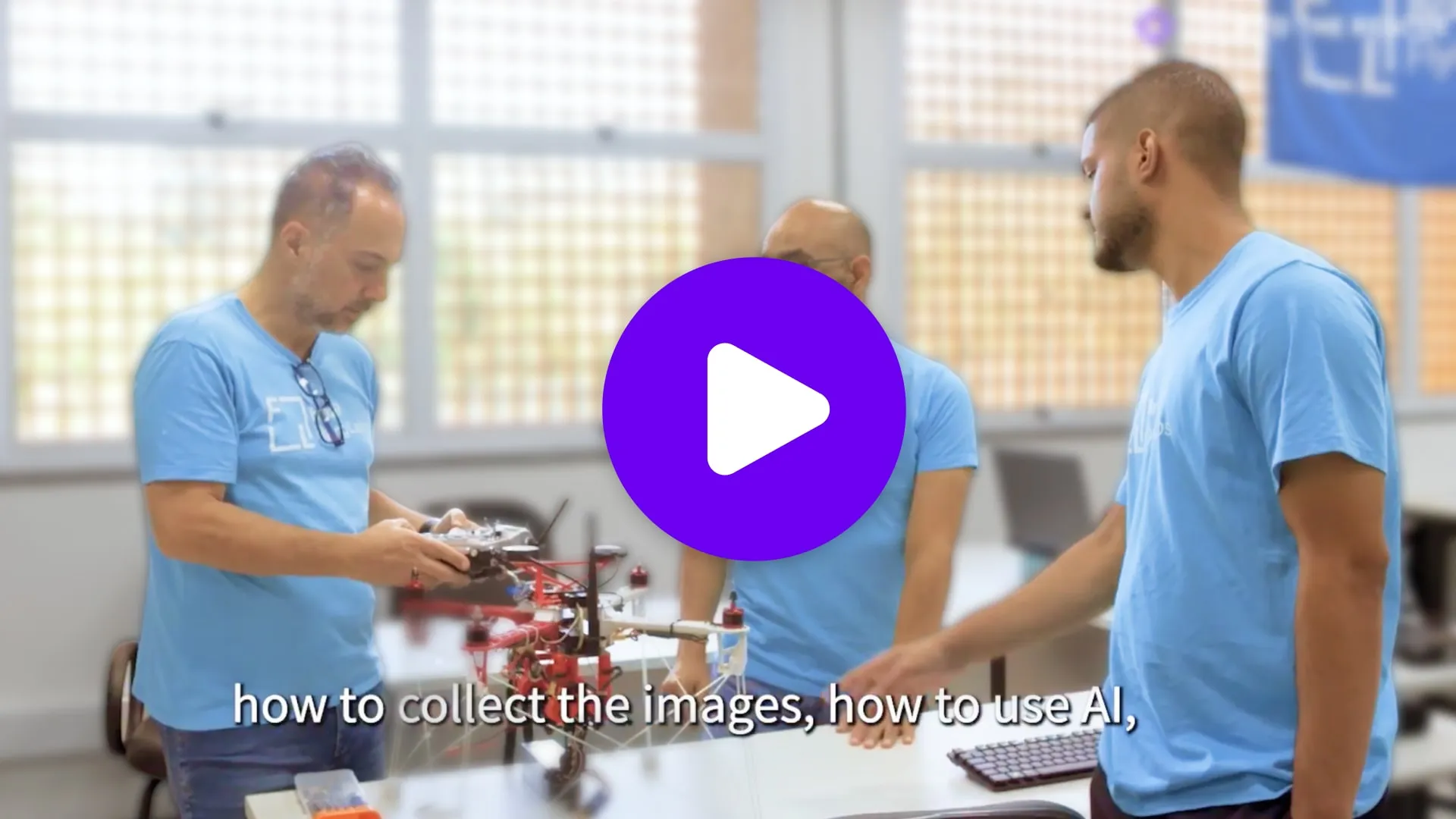
Growing network of tech companies and social impact organisations
Connecting tech talent with meaningful impact
Creating impact across diverse global communities
Tech expertise invested in social good





Fifteen organisations arrive on September 23 with a technical brief and evidence behind it. Join Matching Day, hear what they need, and be first in line to apply.
Attending is free. Registering doesn't commit your team to a project




